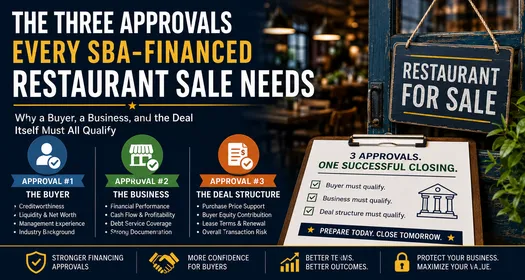
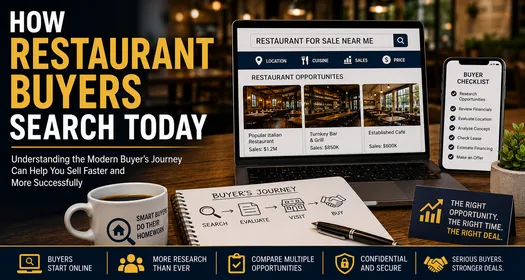
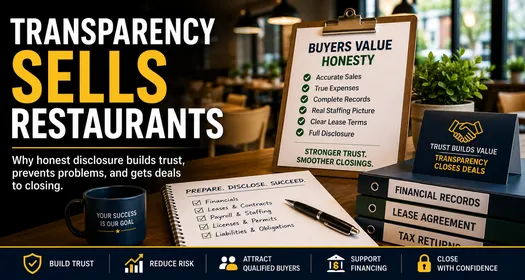
Selling Your Restaurant Confidentially
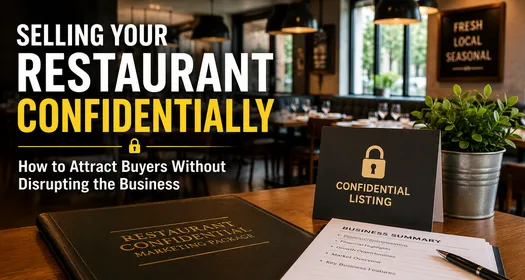
Selling Your Restaurant Confidentially
How to Attract Buyers Without Disrupting the Business, Marketing a restaurant for sale requires balance.
You want to reach qualified buyers, but revealing the sale too early can create concern among employees, customers, vendors, and landlords. The best marketing strategy creates strong buyer interest while protecting the identity and stability of the business.
Why Confidentiality Matters
When word spreads that a restaurant may be for sale, several problems can follow:
- Employees may worry about job security
- Customers may assume the restaurant is struggling or closing
- Vendors may change credit terms
- Competitors may target staff or customers
- Landlords may become concerned about a future ownership change
Protecting confidentiality helps preserve the value of the business and keeps operations running normally during the sale process.
Use a Blind Listing
A blind listing promotes the opportunity without revealing the restaurant’s identity.
A strong blind listing may include:
- General location
- Cuisine or concept
- Revenue range
- Seating capacity
- Key business highlights
- Growth opportunities
It should usually exclude:
- The restaurant name
- Exact address
- Recognizable photographs
- Employee information
- Proprietary operating details
The goal is to provide enough information to attract serious buyers without making the business easy to identify.
Qualify Buyers Before Sharing Details
Not every inquiry should receive access to sensitive information.
Before releasing confidential materials, sellers or brokers should consider requiring the buyer to:
- Complete an inquiry form
- Demonstrate financial capability
- Provide relevant experience
- Sign a nondisclosure agreement
This helps reduce unnecessary exposure and focuses the process on serious buyers.
Release Information in Stages
Confidential information should be shared gradually.
A typical process may look like this:
Public Marketing
Share only general information about the opportunity.
Qualified Buyer Review
Provide high-level financial and operational information after the buyer has been screened.
Due Diligence
Release detailed financial statements, lease documents, contracts, and operating records after serious interest has been established.
Final Negotiations
Coordinate management meetings, site visits, and final document review once the buyer is moving toward an offer or purchase agreement.
Progressive disclosure gives buyers the information they need while limiting unnecessary risk.
Use Professional Marketing Materials
High-quality materials can build buyer confidence without exposing the restaurant.
A confidential marketing package may include:
- A business summary
- Financial highlights
- Concept description
- Market overview
- Growth opportunities
- General operating information
- Photographs that do not reveal the business
Tax returns, employee records, lease documents, and detailed internal reports should not be posted publicly.
Coordinate Site Visits Carefully
Site visits should be scheduled to avoid drawing attention.
Good times may include:
- Before opening
- Between meal periods
- After closing
- During slower operating hours
Buyers should be told not to question employees, photograph the property without approval, or discuss the potential sale with customers.
In some cases, the buyer may initially visit as a normal customer before a formal tour is arranged.
Avoid Common Confidentiality Mistakes
Several mistakes can reveal a restaurant too early:
- Publishing the exact address
- Using recognizable interior or exterior photos
- Sharing financial information before qualification
- Allowing buyers to contact employees directly
- Scheduling obvious tours during peak hours
- Telling staff before the transaction is reasonably certain
Even small details can identify a business in a local market.
Work With Restaurant Transaction Specialists
Restaurant sales involve issues that may not arise in other business transactions, including:
- Lease assignments
- Liquor licenses
- Equipment ownership and condition
- Gift-card liabilities
- Staffing transitions
- Franchise approvals
- Vendor relationships
- Confidential buyer screening
A broker, attorney, lender, or advisor with hospitality experience may help reduce the risk of disclosure and keep the transaction organized.
Maximum Exposure, Minimum Disruption
The goal is not to hide the opportunity from buyers. It is to control how and when sensitive information is released.
A well-managed confidential sale can help sellers:
- Reach qualified buyers
- Protect employees
- Maintain customer confidence
- Preserve vendor relationships
- Reduce competitive risk
- Protect the value of the restaurant
The strongest strategy combines broad marketing with careful buyer qualification and controlled access to information.
Ready to Buy or Sell a Restaurant?
SellYourRestaurant.com was built specifically for restaurant owners, buyers, brokers, and hospitality investors. Our platform helps buyers discover restaurant opportunities while giving sellers the tools to market their business confidentially and professionally.
Reach qualified buyers. Protect your business. Close the deal.
This article is for general informational purposes only and should not be considered legal, financial, tax, or professional advice.