How Restaurant Buyers Search Today
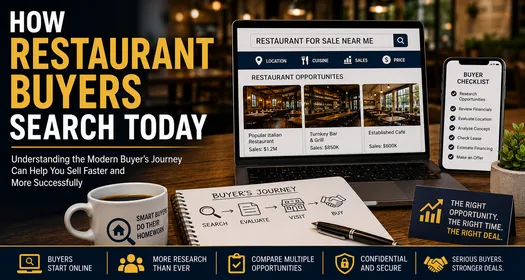
How Restaurant Buyers Search Today
Understanding the Modern Buyer Journey
The way people search for restaurant opportunities has changed significantly.
Buyers once relied mainly on newspaper ads, local brokers, and word-of-mouth referrals. Today, most begin online, compare multiple listings, research financing, and evaluate businesses before contacting a seller or broker.
For restaurant owners considering a sale, understanding how buyers search can help create stronger listings, attract better inquiries, and improve the chances of a successful transaction.
Buyers Start Online
Most restaurant buyers begin with digital research.
They may use:
- Restaurant-for-sale marketplaces
- Search engines
- Business brokerage websites
- Commercial real estate platforms
- Social media
- Industry reports
- SBA financing resources
- Restaurant operating benchmarks
Many buyers research ownership costs, valuation, financing, and operating requirements before they make an inquiry.
This means today’s buyers are often better informed and more selective.
Where Buyers Find Restaurants
Specialized Marketplaces
Restaurant-focused marketplaces help buyers compare:
- Restaurants
- Bars and taverns
- Cafés
- Pizzerias
- Quick-service concepts
- Restaurant real estate
- Hospitality investment opportunities
A specialized marketplace makes it easier to filter listings by location, price, concept, sales, and other important factors.
Search Engines
Buyers frequently search phrases such as:
- Restaurant for sale near me
- Buy a restaurant
- Pizzeria for sale
- Bar for sale
- Restaurant business opportunity
- Restaurant real estate for sale
Listings with strong online visibility are more likely to be discovered during the early stages of a buyer’s search.
Restaurant Brokers
Hospitality-focused brokers remain an important source of opportunities.
They may help buyers:
- Identify listings
- Discover off-market opportunities
- Understand value
- Become financially qualified
- Coordinate confidential communications
- Navigate offers and due diligence
Many serious buyers use both online marketplaces and broker relationships.
What Buyers Review First
Buyers often make an initial judgment within minutes.
The most important factors usually include location, financial performance, concept, lease strength, and growth potential.
Location
Buyers may evaluate:
- Local demographics
- Traffic patterns
- Visibility
- Parking
- Nearby competition
- Development activity
- Delivery area
- Seasonal demand
A strong location can generate more interest, but buyers also consider whether the concept fits the surrounding market.
Financial Performance
Buyers want to understand whether the restaurant can produce reliable income.
They typically review:
- Revenue trends
- Profitability
- Seller’s Discretionary Earnings
- Cash-flow consistency
- Labor and food costs
- Rent
- Growth potential
Clear, organized financial information creates confidence.
Concept and Brand
Buyers may be attracted to restaurants with:
- Loyal customers
- Strong online reviews
- Recognizable branding
- A unique concept
- Proven systems
- Expansion opportunities
A business that offers more than equipment and a lease is often easier for buyers to understand and value.
Mobile Presentation Matters
Many buyers review opportunities from their phones.
Listings should therefore be:
- Mobile-friendly
- Easy to scan
- Visually appealing
- Professionally written
- Quick to load
- Simple to navigate
A listing that is difficult to read on a mobile device may lose buyer attention quickly.
What Makes a Buyer Inquire?
Buyers may review many opportunities but contact only a few sellers.
Strong listings typically include three important elements.
A Clear Headline
Examples include:
- Profitable Neighborhood Pizzeria
- Established Coastal Seafood Restaurant
- Turnkey Café with Strong Cash Flow
- Popular Bar and Grill Opportunity
The headline should communicate the main value of the opportunity without revealing the restaurant’s identity.
Professional Photography
High-quality images can help buyers understand the atmosphere and condition of the business.
Photos may feature:
- Dining areas
- Bar space
- Patio seating
- Kitchen equipment
- Exterior appearance
- Décor and ambiance
For confidential listings, recognizable signs, landmarks, and unique features should be avoided.
Useful Business Highlights
Buyers respond to practical information such as:
- Revenue range
- Seating capacity
- Lease terms
- Operating schedule
- Equipment
- Licenses
- Growth opportunities
- Owner involvement
- Management structure
The goal is to provide enough information to encourage an inquiry without exposing confidential details.
Confidentiality Still Matters
Most restaurant listings should not publicly reveal the business name or exact address.
A confidential listing may instead describe:
- The general geographic area
- Cuisine or concept
- Sales range
- Seating
- Business strengths
- Lease highlights
- Growth potential
More sensitive information can be released after the buyer is qualified and signs a nondisclosure agreement.
What Buyers Expect After Inquiring
Once a buyer expresses interest, the process should feel organized and professional.
Typical next steps include:
Buyer Qualification
The seller or broker reviews the buyer’s financial capacity, experience, and purchase criteria.
Nondisclosure Agreement
The buyer agrees to protect confidential information.
Business Information
Qualified buyers may receive financial summaries, operational details, and additional information about the opportunity.
Site Visit
Tours should be scheduled discreetly and without disrupting employees or customers.
Due Diligence
Serious buyers review financial statements, tax returns, leases, contracts, equipment, licenses, and operating records.
A well-managed process makes it easier for buyers to stay engaged.
What Buyers Want in a Modern Restaurant
Many buyers prefer businesses that are easier to operate and have clear growth potential.
They may place additional value on:
- Experienced management
- Documented systems
- Online ordering
- Modern POS reporting
- Delivery integration
- Loyalty programs
- Strong digital marketing
- Catering potential
- Expansion opportunities
Turnkey operations are often especially attractive because they reduce the buyer’s perceived risk.
What Sellers Can Learn
Restaurant owners can improve buyer interest by presenting the business the way buyers expect to find it.
Strong listings usually:
- Use professional photography
- Highlight financial performance
- Explain growth opportunities
- Present accurate information
- Protect confidentiality
- Clearly describe the concept
- Make the opportunity easy to understand
A restaurant that is well prepared and professionally marketed is more likely to attract qualified inquiries.
The Bottom Line
Restaurant buyers now conduct more research, compare more opportunities, and expect clearer information than ever before.
Sellers who understand the modern buyer journey can position their restaurants more effectively, generate stronger interest, and create a smoother transaction process.
Whether a sale is planned for the near future or several years away, understanding how buyers search is an important part of preparing the business for market.
Ready to Buy or Sell a Restaurant?
SellYourRestaurant.com was built specifically for restaurant owners, buyers, brokers, and hospitality investors. Our platform helps buyers discover restaurant opportunities while giving sellers the tools to market their business confidentially and professionally.
Reach qualified buyers. Protect your business. Close the deal.
This article is for general informational purposes only and should not be considered legal, financial, tax, or professional advice.