SBA Loans 101
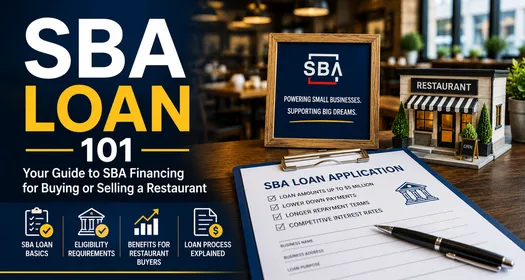
SBA Loans 101
What Restaurant Buyers and Sellers Need to Know
Financing often determines whether a restaurant sale reaches closing.
A qualified buyer may have restaurant experience and enough cash for a down payment but still need financing to complete the purchase. An SBA-backed loan can help make the acquisition possible.
SBA financing can also help sellers by expanding the pool of buyers who may be able to purchase the business. However, both the buyer and the restaurant must qualify.
What Is an SBA Loan?
An SBA loan is issued by a participating bank or approved lender, not directly by the U.S. Small Business Administration.
The SBA guarantees part of the loan, reducing some of the lender’s risk. This can allow qualified buyers to obtain longer repayment terms and contribute less cash than may be required with conventional financing.
The SBA 7(a) program is commonly used to purchase an operating restaurant.
Loan proceeds may be used for:
The restaurant purchase price
Furniture, fixtures and equipment
Working capital
Inventory
Leasehold improvements
Certain closing costs
Commercial real estate, when included
Eligible partner or ownership buyouts
The maximum SBA 7(a) loan amount is $5 million, although most independent restaurant transactions are much smaller.
Why SBA Financing Matters in Restaurant Sales
A restaurant’s value is often made up of more than equipment.
It may also include:
Goodwill
Location
Lease rights
Customer relationships
Brand reputation
Trained employees
Recipes and operating systems
These assets may be valuable, but they are difficult for a conventional lender to use as collateral.
The SBA guarantee can make lenders more comfortable financing a restaurant purchase that includes both equipment and intangible business value.
How Much Does a Buyer Need to Put Down?
Many restaurant buyers plan for a down payment of approximately 10%, but the actual requirement can vary.
The lender may consider:
The purchase price
The buyer’s experience and credit
The restaurant’s cash flow
The value of the equipment
The amount of goodwill
Whether real estate is included
Whether the seller is providing financing
The lender’s internal policies
Buyers should also keep cash available after closing.
A restaurant may need funds for payroll, inventory, deposits, repairs, marketing and unexpected expenses. Using every available dollar for the purchase can leave the new business undercapitalized.
The Restaurant Must Support the Loan
A lender will not approve a restaurant purchase based only on the asking price.
The business must generate enough documented cash flow to support:
Loan payments
Operating expenses
The buyer’s compensation
Other business obligations
A reasonable financial cushion
Lenders commonly review tax returns, financial statements, bank records, payroll reports and point-of-sale data.
They may also consider legitimate owner add-backs, such as personal or nonrecurring expenses. However, each add-back must be reasonable and supported by documentation.
Unreported cash sales generally will not help a buyer qualify for financing.
Why Financial Records Matter
Sellers should be prepared to provide:
Three years of business tax returns
Current profit-and-loss statements
Balance sheets
Bank statements
Payroll reports
POS sales reports
Business debt information
Equipment and asset lists
Lease documents
Liquor-license information
Franchise documents, when applicable
Major contracts and obligations
The restaurant’s tax returns, financial statements, bank deposits and sales reports should be reasonably consistent.
Clean and organized records can reduce delays and make the restaurant more attractive to qualified buyers.
The Buyer Must Qualify
A profitable restaurant does not guarantee loan approval.
The lender will also review the buyer’s:
Credit history
Available cash
Personal financial statement
Tax returns
Business experience
Résumé
Existing debts
Business plan
Financial projections
Restaurant or hospitality experience can be especially important.
A buyer with limited direct experience may improve the application by retaining experienced management, involving an operating partner or presenting a strong transition plan.
Buyers should also confirm current SBA citizenship, residency and ownership requirements with a qualified lender early in the process.
Personal Guarantees and Collateral
Owners with 20% or more of the borrowing business are generally required to personally guarantee the loan.
The lender may also place liens on business assets such as equipment, fixtures and inventory. Available personal real estate or other assets may also need to be pledged under applicable SBA and lender requirements.
Buyers should understand these personal obligations before moving forward.
The SBA Loan Process
A restaurant acquisition loan generally includes four stages:
1. Prequalification
The lender reviews the buyer’s financial background and preliminary information about the restaurant.
2. Offer or Purchase Agreement
The buyer and seller negotiate a letter of intent or purchase agreement that allows enough time for financing, due diligence, lease approval and licensing.
3. Underwriting
The lender reviews the restaurant’s financial performance, the buyer’s qualifications, the lease, equipment, collateral and purchase structure.
A business valuation or equipment appraisal may also be required.
4. Closing
After approval, the parties complete the remaining conditions, which may include:
Lease assignment
Liquor-license transfer
Permit approvals
Insurance
Lien payoffs
Franchise approval
Final closing documents
What Sellers Should Do Before Listing
Restaurant owners can improve the likelihood of financing by preparing early.
Before listing, sellers should:
Organize tax returns and financial statements
Reconcile sales with POS reports and bank deposits
Identify reasonable owner add-backs
Update the equipment list
Review the lease and transfer requirements
Identify liens or outstanding debt
Document gift-card and rewards-program liabilities
Confirm permits and licenses are current
Separate personal expenses from business expenses
Some sellers also ask an SBA lender to perform a preliminary review of the restaurant before it goes on the market.
This does not guarantee financing, but it may identify issues that can be corrected before a buyer is found.
What Buyers Should Do Before Making an Offer
Buyers should speak with an SBA lender before focusing on a specific restaurant.
Early prequalification can help establish:
A realistic purchase budget
The likely down payment
Required cash reserves
Experience requirements
Eligibility concerns
The documents needed for approval
Buyers should remember that lender approval is not a substitute for due diligence.
The buyer must still evaluate the restaurant’s financial records, lease, equipment, staffing, licenses, competition and future investment needs.
Choose a Lender That Understands Restaurants
Restaurant transactions involve issues that do not appear in every business sale, including:
Liquor licenses
Perishable inventory
Equipment condition
Gift-card liabilities
Delivery-platform agreements
Franchise requirements
Landlord approval
Seasonal cash flow
Short remaining lease terms
An experienced SBA acquisition lender who understands restaurant operations may be better equipped to identify problems and structure the loan correctly.
The Bottom Line
SBA financing can be a valuable tool for buying or selling an independent restaurant.
For buyers, it may provide access to financing with longer repayment terms and a lower initial cash requirement than conventional lending.
For sellers, an SBA-ready restaurant may attract more qualified buyers.
The strongest transactions begin with preparation. Buyers should become prequalified early, and sellers should organize their financial and operational records before listing the business.
Ready to Buy or Sell a Restaurant?
SellYourRestaurant.com was built specifically for restaurant owners, buyers, brokers, and hospitality investors. Our platform helps buyers discover restaurant opportunities while giving sellers the tools to market their business confidentially and professionally.
Reach qualified buyers. Protect your business. Close the deal.
This article is for general informational purposes only and should not be considered legal, financial, tax, lending, or professional advice.