Full-Service Restaurants Were the No. 1 Business Bought With SBA 7(a) Loans in the Year to June 30, 2026
SBA FINANCING | NATIONAL
An analysis of 5,371 purchase loans by The Mercantile Record shows restaurant buyers borrow well below the typical purchase loan, close fast and default less than startups.
By SYR News | Oct. 20, 2026
Lenders made 5,371 SBA 7(a) term loans to buy existing businesses in the 12 months ending June 30, 2026, worth $7.4 billion, according to an analysis of SBA loan records by The Mercantile Record, published Oct. 6 and updated Oct. 13. Purchases made up 11% of all 7(a) loans but 26% of the dollars.
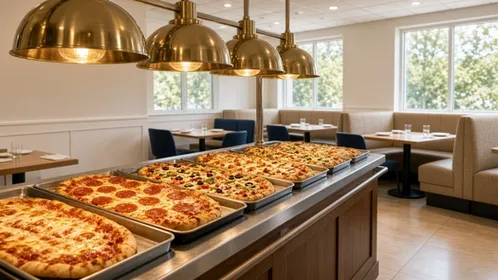
Restaurants are not a fringe use of the SBA purchase program. They lead it. Full-service restaurants were the single most common type of business bought with a 7(a) loan in that period.
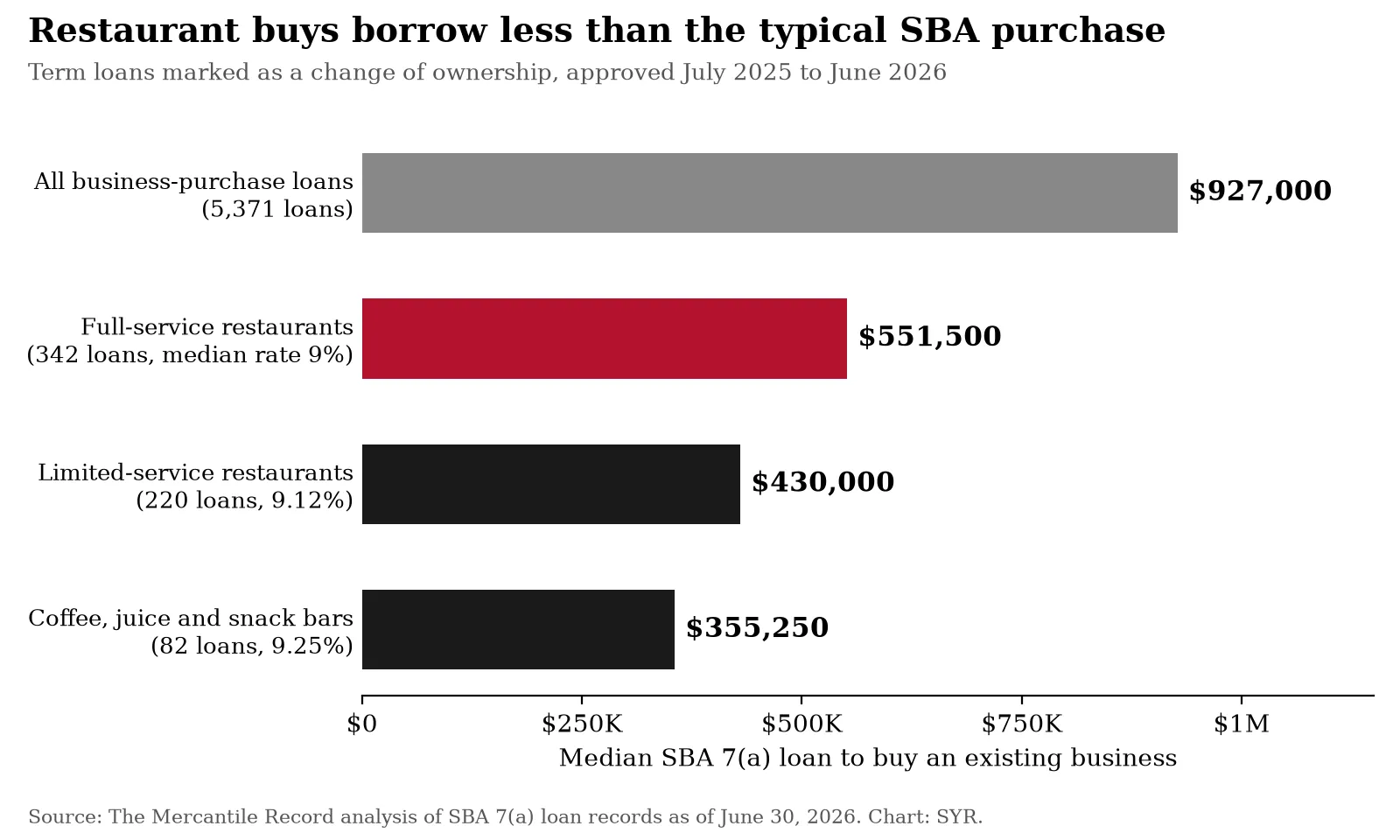
Median SBA 7(a) business-purchase loan, all industries and three restaurant categories, July 2025 to June 2026. Source: The Mercantile Record. Chart: SYR.
Restaurant purchase loans, July 2025 to June 2026
- Full-service restaurants: 342 loans, median $551,500, median rate 9%
- Limited-service restaurants: 220 loans, median $430,000, median rate 9.12%
- Coffee, juice and snack bars: 82 loans, median $355,250, median rate 9.25%
- All business purchases: median $927,000; a quarter were under $433,000 and a quarter over $1,895,500
“Restaurants are not a fringe use of the SBA purchase program. They lead it.”
How purchase loans behave
- Lender type: 90% were approved by preferred lenders under their own authority, without SBA reviewing the credit first
- Speed: a median of 22 days from approval to funding
- Cancellations: 9% of purchase approvals in fiscal 2025 were cancelled, against 22% of other term loans
- Charge-offs: 1.3% of purchase loans approved in fiscal 2018 through 2021 were charged off within four years, against 3.1% of startup loans
The Mercantile Record notes that size explains part of that gap, since larger loans of every kind are charged off less often, and that the records count only loans written off, the last step in a failure.
What it means for buyers and sellers
For buyers, the data shows that lenders do finance restaurant acquisitions in volume, typically at loan sizes well below the overall purchase median. For sellers, it is a reminder that the most common buyer of a full-service restaurant may be someone using an SBA loan, which means the business has to pass SBA's tests. Under the SOP 50 10 8.1 rules in effect since Oct. 1, 2026, most purchases need 1.25x debt service coverage on results the business has already posted, and a 10% equity injection.
Key Takeaways
- Full-service restaurants were the No. 1 industry bought with SBA 7(a) loans in the year to June 30, 2026, with 342 loans.
- The median full-service restaurant purchase loan was $551,500, versus $927,000 for all purchases.
- Purchase loans funded in a median of 22 days, and 90% came from preferred lenders.
- Purchase loans from FY2018-2021 had a 1.3% four-year charge-off rate, versus 3.1% for startups.
More from SYR News
Sources
The Mercantile Record, "SBA loans to buy a business: the 2026 rules and what 5,371 loans show" (Oct. 6, 2026, updated Oct. 13, 2026), based on SBA 7(a) loan-level records as of June 30, 2026: https://mercantilerecord.com/financing/sba-loan-to-buy-a-business/